Thursday, May 27, 2010

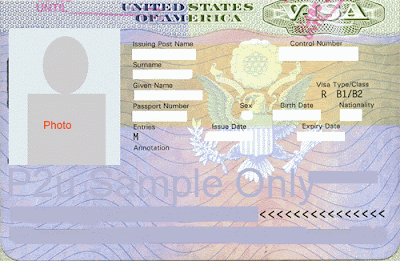
Applying for Non-Immigration Visa in Nepal

Applying for Non-Immigration Visa in Nepal

If you are applying on or after Monday, May 31, 2010 you must apply using the free, online, DS-160 visa application form. We will no longer accept applications submitted through the EVAF from Monday, May 31, 2010.

Applying with the online DS-160 application form

To apply in Nepal for a non-immigrant visa for temporary travel to the United States, you must:

• Complete the online visa application form, and click “Submit”
• Print your DS-160 confirmation page
• Bring confirmation page and $131 equivalent in Nepalese rupees to Nabil Bank to schedule your visa interview
• Interview for your visa at the U.S. Embassy’s Consular Section
• After successful interview, pay visa issuance fee, if any, at U.S. Embassy

How to use the DS-160 Online Visa Application Form

1. Before scheduling your visa interview, you must first complete the free, online, DS-160 visa application form. This online application replaces the Electronic Visa Application Form (DS-156 EVAF). Read the “Instructions” page for details on completing the form.
2. To fill out your online application, click “Start Application,” and answer all the required questions.
3. Upload a digital photo of yourself. Photo requirements can be found here. If your photo is not accepted, submit your application and bring a passport photo with you to the U.S. Embassy at the time of your scheduled interview.
4. To complete your online visa application, click “Sign and Submit” and print your confirmation page (with bar code). You will need to bring this page with you to Nabil Bank to schedule your interview. Nabil Bank will return the confirmation page to you after you schedule your interview. Bring the confirmation page with you to the U.S. Embassy on the day of your interview.

Please note: The online system will time out after 15 minutes of non-use.

How to schedule your visa interview

Nabil Bank is responsible for collecting the visa application fee and scheduling visa interviews for the U.S. Embassy. Please do not call the Embassy's consular section for any appointment information. Applicants should bring with them to Nabil Bank the following items:

• A passport with at least six months of validity beyond the initial date of travel,
• A clear printout of the completed online visa application’s confirmation page (with bar code),
• The equivalent of $131 in Nepalese rupees to pay the visa application fee.

Please note: the application fee is a non-refundable administrative processing fee. It is collected whether or not a visa is issued.

These should be brought to any of the following Nabil Bank locations in Nepal to schedule a visa interview:

• Maharajgunj, Kathmandu
• Biratnagar
• Birgunj
• Pokhara
• Butwal
• Nepalgunj

Nabil Bank will inform the applicant of the date and time when he or she should come to the U.S. Embassy’s Consular Section for a visa interview. At the scheduled appointment time, applicants need to bring to the Embassy their passport, their printed application confirmation page, and the yellow fee receipt they receive from Nabil Bank. Applicants will not be allowed into the U.S. Embassy if they do not have their yellow fee receipt with them. At that time, applicants are welcome to bring any additional documents they wish in support of their application. If your photo was not accepted by the online application, you need to bring a passport-sized photo with you to the interview (see photo requirements here).

Interviewing for a visa at the U.S. Embassy's Consular Section

After you have scheduled your interview at Nabil Bank, bring your yellow fee receipt to the U.S. Embassy at your scheduled interview time. You may also bring any additional documents to the interview that you feel may support your case. Please note that supporting documentation is secondary to the interview itself.

Visa application fees

There is a standard application fee of $131 for all visa types. This covers the administrative expenses of processing your application and the interview. This fee is payable at Nabil Bank when scheduling your visa interview appointment. It is non-refundable, regardless of the outcome of your interview.

In addition to the $131 application fee, some visa types require additional issuance fees. These are paid in cash (rupees or USD) at the U.S. Embassy only after a consular officer has told you that you qualify for your visa. The issuance fees are as follows


Note: These are the current visa application and visa issuance fees, as of December 2009. Fees are subject to change.

Tuesday, May 18, 2010

Richard Morley and Jayaram Khadka

How We Met; Richard Morley and Jayaram Khadka
The Independent, 25-May-1997
Interviews Phil Sweeney

Richard Morley, 43, millionaire entrepreneur and social experimenter, was born in London and spent periods as a naval officer, actor and producer. In 1982 he founded his "molecular family", currently eight members who live in a castle in the Forest of Dean. In 1990 he brought to England Jayaram Khadka, son of a man who had saved his life in Nepal; after a long, much-publicized fight with the previous government, Morley has just won residential status for him. Jayaram "Jay" Khadka was born, he thinks, 20 years ago in a village south of Kathmandu. From his early teens he worked to support his mother - until meeting Richard Morley, whom he now refers to as his father

By Richard Morley
In 1984 I went to Nepal to research tribal groups: I wanted to go to the most remote part of the planet to find people not influenced by outside society. One day I walked too far, too fast, too high, and got a collapsed lung. I was taken to a village coughing up blood. An ex-policeman called Mr Khadka said he'd go and get help; I later learnt that he'd covered six days distance in three, even though he himself was not well.

After I recovered, I went to thank him, and he told me how ill he was. I thought he was going to touch me for money, which I would have given gladly. But he asked for a favor: he wanted a photo of me and he asked me if I'd take care of his son if he died. I said yes, and off I went - I didn't really pay much attention, I just thought this was a way of expressing friendship.

Some five or six years later, myself and members of my molecular family had the opportunity of going back to Nepal, so we decided to go and visit Khadka. When we got there we were told he had died, and the son had moved to another village, Bhaktapur. We took an overnight bus there, arrived early in the morning, and went to a restaurant for tea. As we sat down, we saw a serving boy sweeping the floor, and he started staring at me in a strange way. Eventually he came up and, in half English, half Nepalese, said: "Are you the man who has come to rescue me?" I thought he was slightly round the twist or after money or something. I wasn't being very friendly first thing in the morning, I wanted a cup of tea. Eventually I said: "Look, who are you?" He said: "I am Jayaram Khadka."

He was tall, fresh-faced, taller than the other people around him. He told me his age was 17, almost 18, and that fitted. Then he told me his father had given him a photograph and told him one day the man in the photo would come and rescue him when he was in trouble. I thought: "My god, this is the boy I'm looking for."

I said, "Can I help you with some money?" And he refused point blank. That was the thing that struck me most, the sincerity with which he refused the money. He asked me to promise to come and see him again. We were on our way to Indonesia, but had a return flight through Nepal, so I said I could come back in two or three months.

In Indonesia we discussed how to help him, and decided the best way was to take him to England for six months, get him some language training, and then he could go back and get a better job. So I went back to Nepal, made my way to the restaurant, and there he was again, beaming away. I outlined the plan, but Jay didn't leap at it like I thought he would. He had been exploited, so was wary of all adults - he didn't trust me and he just couldn't decide what to do.

Eventually we went for a few days to a little tourist resort where you could see the big peaks of the Himalayas. We spent two days together walking and talking and it was very quick -he trusted me and I trusted him, and we then agreed he should come over to England.

Jay had said he was 18, but back in England we realized he was much younger. On the first or second day he had to have a bath which he'd never had before, he was terrified, so we helped him into the bath, and as we did we noticed he wasn't as physically developed as an 18-year-old. Also in England he seemed more of a child, playing with teddies and Lego bricks, so we soon realized he wasn't capable of going to college, he wasn't emotionally mature enough. So I asked the Home Office for three years to let him grow up a little.

During the fight to keep Jay here there were bad moments, very distressing times, but we never thought the family would lose him, because if he'd had to go we'd have gone, too. Obviously I feel paternal towards him. If you brought any kid up, you'd feel paternal.

My position in the family is due to democracy. I'm thought to be the person most suited to be captain. When everybody thinks I'm not, I'll be told, and I'll step down. I want to hand over to somebody who can deal with it properly.

Jay is the most likely candidate because of his personality, his style: he is in no way polluted by society. When he arrived he had no concept of dishonesty, aggression, theft, deceit, and, though I was aware that our family's wealth might make him arrogant, he has no greed. He's heir to the entire family.

By Jayaram Khadka
I was born in a very rural mountain area when my parents were both in their forties. My father had more than one wife and rarely visited our home. On one visit he gave me a photograph and said one day this man will come and help you. I didn't think much of it and then life moved on.

After my father died in 1988 of heart illness, my school life ended and I had to earn money. I found work in a restaurant in Bhaktapur. I slept on the restaurant floor, got up at six in the morning and spent most of my time washing up, shopping and helping in the kitchen, getting pounds 4 a month. I should explain the caste system. I'm from the Chetri caste, traditionally warriors and rulers, but my father didn't live his life in a dignified way - he drank and had a lower-caste wife - so I didn't have the best of my background. Basically, I got onto the bottom of the pile. Every day in the restaurant was the same. I didn't have a watch, radio or calendar, so I told the time by looking at the sun. I was feeling pretty miserable, but that was the best I could get. I didn't really think of the picture of the man, it was just like a dream; but then eventually came the time when my new father walked in the door.

I went up to him and started asking questions and he didn't quite know what I was talking about. But eventually we started having conversations in mixed English and Nepalese. He offered to help me with money. But I received money in the restaurant, I was fed, so I didn't think money was important to me. Also, I think money had a bit of tastelessness ... you earn your money rather than be given it. I suppose that comes from being Chetri. So I said no thanks.

He went away and my normal lifestyle resumed. I think during our first meeting there was something unspoken, something had connected. When he came back we sat down after breakfast and discussed his proposal. It was so different, it was something I had to think about, going to the other side of the world. Also I felt a sense of duty, I couldn't just leave the restaurant, or my mother.

We talked for some days. My father drew a map of Europe on the breakfast table and he told me about his castle. I got hold of a Nepalese dictionary and looked up "castle" and it meant literally a fortress, a round wall or something you build quickly to defend yourself, and I thought how the hell can you live in this place?

I left the restaurant and we travelled round the sights and talked about what was to come. By this time I understood my father much better. I had a bad foot, cracked, and he applied some antiseptic cream and a human rapport began to build up. He was somebody who cared about me, wanted to help.

Landing at Gatwick was like being picked up and put on Mars - a hi- tech, completely different planet. There were things like escalators, automatic doors, strange food - ham, red wine. I tried it and was almost sick, like drinking paraffin.

When I got to the house the thing that hit me was the carpet - so soft, better than what I slept on. For six weeks I didn't communicate with the other members of the family. I couldn't understand anybody in the house. But my father had picked up how to communicate with me. He understood a lot of things without me saying them in words.

The family itself didn't really surprise me. I come from a culture where everything is shared with your mates. If you buy a sweet and your friend hasn't any, you bite off one half and give half to your friend. And Nepalese family life prepared me for a family which includes people who are not directly related to you: a man can have more than one wife and keep those wives and children together.

I made a formal, permanent commitment to the group two years ago. I understand everything about the family, what we are doing, what is involved. I know it is not straightforward like an average household, we are pioneering a new concept and it's something I'm proud to be a part of. I consider my growing up was my previous life in Nepal. And my life here is my new adult life. I'm married into the family - as far as outside relationships are concerned, if I get involved (which I am at the moment) with anybody, I make it perfectly clear what it involves having a relationship with me.

The family is very important to me. They were prepared to give up everything for me, and when people suggest that it is not a proper kind of relationship, it's most hurtful. I think if my family were just a normal household of father, mother and children, we couldn't have survived, we would have cracked up ages ago. Because we are such a diverse bunch of people, we were able to sustain the constant fight with the Home Office. So this is central to me and no one can change it. My father's worked hard on this, and he's got a brilliant mind and I admire him for that. I look at him as a sort of guru. I certainly intend to follow in his footsteps by taking on his responsibility in eight to 10 years' time. !
Tuesday, May 11, 2010

Mr. Indra B. Tamang inherits $8.4 million estate including 2 coops in Dakota in UWS (NYC)

The Butler Did It—at the Dakota
WSJ, 10-May-2010
By JOSH BARBANEL

After Decades as Caretaker and Cook for Ruth Ford, He Inherited Valuable Apartments

Indra B. Tamang, who grew up in a mud house in a farming village in Nepal, has reached a pinnacle of society after more than three decades of loyal service as a butler, cook and caretaker to a socially prominent American family.

The cook became the master—as the inheritor of two apartments at the Dakota, the legendary West Side apartment building, and a valuable collection of Russian surrealist art—after the death last year at the age of 98 of Ruth Ford, a film and stage actress who was the wife of Zachary Scott, a dashing Hollywood star.

At a time when many Americans are puzzling over how an immigrant from Pakistan could turn on his adopted country and plant a bomb in Times Square, the rare fortune of Mr. Tamang, a new American citizen, shows another side of immigrant life: how many years of painstaking dedication is sometimes richly rewarded.

In her will, accepted for probate last month in Surrogate's Court in Manhattan, Ms. Ford turned over her entire estate including the apartments and an art collection, with the exception of her clothing and costume jewelry, to Mr. Tamang.

She specifically disinherited her daughter, Shelley Scott, and her two grandchildren in favor of her Nepalese employee, but did not give a reason for doing so.

Court records show Ms. Scott filed an objection to her mother's will and received a modest settlement. Through her attorney, Arnie Herz, she indicated that she was "very happy" for Mr. Tamang.

The value of the estate is about $8.4 million, according to court records, though it may be worth somewhat less with the sagging real estate market.

Mr. Tamang was brought to the U.S. in 1974 by Ms. Ford's brother, Charles Henri Ford, a surrealist poet, novelist, photographer and collage artist, who had lived for several years in a house in Katmandu.

In the 1940s Mr. Ford published the "View," an influential avant-garde magazine that featured contributions from the likes of Pablo Picasso and Albert Camus.

When he arrived, Mr. Tamang was in his early 20s. He soon went to work for Mr. Ford. After Mr. Ford's death in 2002, he went into service for Ms. Ford.

Now 57 years old, Mr. Tamang has a wife and three daughters and owns a two-family home in the Woodside section of Queens. Mr. Tamang also owns the house in Katmandu where he first worked for Mr. Ford.

In addition, he now has a multimillion-dollar inheritance and the views of a co-op board to consider. He became a U.S. citizen last year, more than 20 years after first applying for citizenship, with the help of Ms. Ford.

"I was always hearing about America," Mr. Tamang said. "I took my chance and I came. I had no idea how the work was going to go and how long I would stay."

When Mr. Ford brought Mr. Tamang to New York, they moved into the Dakota—into a studio apartment on the 10th floor owned by Ruth Ford. The apartment was built under the eaves of the roof and had once been a maid's room, albeit one with a park view.

Mr. Tamang said he shopped and cooked for Mr. Ford and looked after him as he traveled around the world. He took up photography, and collaborated with Mr. Ford on collages and other artistic endeavors. In recent years he became a caregiver as the Fords became frail.

Ms. Ford and Mr. Scott moved into a larger three-bedroom apartment at the Dakota in the early 1950s and Ms. Ford lived there until her death more than half a century later.

She turned her apartment into a salon, throwing parties where artists, playwrights, novelists and composers would gather. Leonard Bernstein, William Faulkner, Truman Capote, Edward Albee, Tennessee Williams and Andy Warhol spent time there.

The 14-foot-high walls were covered with gold-flecked wallpaper and scores of paintings and drawings by Pavel Tchelitchew, a Russian-born surrealist who was her brother's partner for several decades before he died in 1957. Mr. Tamang was often assigned to assist in her soirees.

Several brokers said it was unlikely that the Dakota's co-op board, known as one of the most fastidious and unpredictable in the city, would let a former staffer live in the building. A spokeswoman for Prudential Douglas Elliman, which manages the building, declined to comment.

Even though an heir can be the beneficiary of shares in a co-op, the board can refuse to approve the transfer of the shares or can block the right of the beneficiary to live in the building under the basic co-op document known as a proprietary lease.

The issue may not even come up. Karin P.E. Gustafson, an estate attorney who is Mrs. Ford's executor, said that after discussing the taxes and other expenses of the estate, Mr. Tamang agreed to put one of the units, Ms. Ford's three-bedroom apartment, on the market.

Asked if he thought the board would approve him, Mr. Tamang said he didn't know. "I am satisfied living where I am," he added. The larger apartment was listed in December for $7.5 million with Alexander Peters of Prudential Douglas Elliman, but the price has since been cut five times, including a 10% drop at the end of April, to $4.5 million.

The apartment, half of a much larger corner unit, faces north toward 73rd Street and south toward the Dakota's interior courtyard.

While it doesn't have the prized views of Central Park of more expensive apartments in the building, the park can be glimpsed from the living-room windows.

The lowered asking price for the apartment may be offset in part by the rising prices for Tchelitchew's work. For years a portrait of Ms. Ford hung over a fireplace in the Dakota apartment. Tchelitchew painted it in 1937 when she was 26 and had just moved to New York from Mississippi.

Last month, the painting sold for $986,000, including commissions, at Sotheby's spring sales of Russian Art, far above the $150,000 minimum and the highest price paid for a Tchelitchew's work.

Ms. Scott, Mrs. Ford's daughter, had been estranged from her mother for many decades, but according to Mr. Herz kept track of her and was occasionally in touch with Mr. Tamang.

"The one thing that everyone seemed to agree upon is that the guy who took care of her mother and the uncle is a very well liked and well respected," Mr. Herz said. "Shelley also liked this guy and is happy for him."

Mr. Tamang said he hoped to hang onto the second apartment, on the 10th floor, for a while because it is still full of Mr. Ford's photographs and artwork.

In the meantime, Mr. Tamang said he had not decided what to do with the new wealth headed his way, except to pay down some of the mortgage on his house in Queens.


Saturday, May 01, 2010

Bisundev Mahato receives coveted Harvard Award

Nepali scholar receives coveted Harvard Award
Nepalnews.com, 24-Apr-2010

A Nepali scholar Bisundev Mahato has been awarded with Steven A. Schroeder Fellowship award 2010 at Harvard Medical School for his proposal titled "Ambulatory Care Sensitive Conditions, High Variation Conditions, and Regional Variations in Health Care Utilizations and Costs."

Mahato is the first Nepali national to win this highly competitive this award at Harvard Medical School, Harvard University, USA. The award is awarded to only one person every year.

Bisundev is a researcher, an educator, and a social entrepreneur, based in the US. He was educated in acclaimed institutions including Harvard University, Brown University, and Columbia University

Sunday, April 11, 2010

CA Election: Who voted for who

CA Election: Who voted for who
TKP, 14-Mar-2010
Sudhindra Sharma and Bal Krishna Khadka

A small news item on March 11 which did not make it to the headlines or TV discussions mentioned that a former assistant minister and Nepali Congress central committee member Hari Shanker Pariyar had joined the Maoists with some of his Dalit followers. With the Maoists threatening to launch a people’s revolt come end of May, and the other parties in the coalition government considering this merely a bluff, it would be pertinent to explore the support base of the Maoists. Who are the supporters and sympathisers of the Maoists? What are their demographic characteristics in terms of age, educational qualifications and caste/ethnicity? Does Pariyar’s quitting the Nepali Congress and joining the Maoists have any significance?

Three months after the completion of the Constituent Assembly election in April 2008, Interdisciplinary Analysts (IDA) had undertaken a nationwide survey in July-August 2008 with its statistically stratified random sample spread across 30 districts asking which party the respondents had voted for. A few months after the collapse of the Maoist-headed coalition government in May 2009, IDA had conducted another nationwide survey in July where an equal number of people across the country had been asked what they thought of the row over the Chief of Army Staff (COAS) and who they thought was right — the then Prime Minister Pushpa Kamal Dahal Prachanda or President Ram Baran Yadav. From the responses to these two questions, it is possible to ascertain the demographic characteristics of the supporters and sympathisers of the Maoists, at least in very broad terms, and to glean valuable insights.

In the survey carried out in 2008, the following question was asked: "Which political party did you vote for under the proportional system?" As is well known, surveys such as those done by IDA allow for disaggregating the data by variables such as age, sex, urban-rural settlement, development region, ecological region and caste/ethnicity. Disaggregating this question by a respondent’s caste and ethnicity reveals that a person’s choice of a political party is related with his/her caste and ethnicity. This is shown in the Table 1.

Among the eight broad caste/ethnic groups, support for the Maoists is the strongest among the hill Dalits followed by Tarai and hill ethnic communities. While two out of three hill Dalits reported voting for the Maoists in the CA elections, so did almost every other ethnic voter (both among the hill and Tarai ethnic communities). The data also reveals that the Maoists have a fairly good presence among the hill castes. The support base of the Maoists is the weakest among the Madhesi groups — among Madhesi castes, Muslims and Madhesi Dalits.

After the row over the COAS and the collapse of the Maoist-led coalition government, IDA in its nationwide public opinion survey had asked the following question: “On May 3, 2009, the government under the premiership of Pushpa Kamal Dahal Prachanda sacked General Rookmangud Katawal from the post of Chief of Army Staff. Late in the evening the same day, President Ram Baran Yadav wrote to the army headquarters informing General Rookmangud Katawal to stay in the post of Chief of Army Staff and continue his job. What is your opinion in this regard — who do you think was right, Prime Minister Prachanda or President Ram Baran Yadav?”

A high proportion was ambivalent with regards to the row over the COAS: 50 percent said “don’t know/cannot say” on this issue. Among the people who did express their opinion, 25 percent thought that Prime Minister Prachanda’s action was right while 20 percent thought that President Ram Baran Yadav’s action was right. What is revealing is the response to this question by educational attainment levels of the respondents.

When disaggregating the public’s opinion on the COAS row, one notices that a high proportion of the illiterate said “don’t know/cannot say”. With a rise in the educational attainment, people begin to form a definite opinion on the matter. If, for instance, 76 percent of the illiterate said "don’t know/cannot say", this comes down to 13 percent for those who have passed Bachelor’s level. Likewise, once educational attainment increases, those who say that the prime minister was right also increases. It, however, reaches the zenith among those who have passed School Leaving Certificate. With a further increase in the level of education after SLC, those who think the prime minister was right begins to decline. Among those who have passed the Bachelor’s level, only 24 percent think the prime minister was right compared to 41 percent among those who have passed SLC.

The data reveals a clear correlation between the level of educational attainment and the thinking that the president was right with regard to the row over the COAS. Unlike support for the prime minister, it does not taper off after reaching its zenith at a particular point. However, among those who have passed the Intermediate and Bachelor’s level, there is a substantial number of ambivalent opinions that consider neither of them to be right. The fact that support for the then Prime Minister Prachanda in the COAS row is highest among those who have passed SLC need not be construed as being highest among young people in general. Those who have passed SLC could be young people; it could also be older people who were not able to continue their education after SLC.

Combining the findings of the two surveys allows one to form some ideas of the support base of the Maoists. It, however, also leads to the following question: What could be the common feature behind hill Dalits (and hill and Tarai ethnic communities to a lesser extent) and those that have modest educational attainment levels? Though these are quite different entities — one a caste category and the other an educational level — hill Dalits and those who could not continue their education after SLC are those sections of society that feel that they have somehow been disadvantaged by the existing system. Feelings of having been deprived of the things in life that others have, and thus being “stuck” to where they are, could be the feature that ties together and links these disparate entities.

In a much-discussed op-ed piece in Kantipur on March 3, 2010, Pradeep Poudel, chief of the student wing of the Nepali Congress, lamented that Dalits were no longer attracted to the Congress, the political party which had been at the vanguard of the equality movement for half a century. What the news report mentioned above of Hari Shanker Pariyar’s joining the Maoists only said was that he was all praise for the Maoists for uplifting the Dalits. It did not give any clue as to what may have been his real reasons. With two out of three hill Dalits having voted for the Maoists during the CA elections as revealed by the IDA survey, one can only imagine the pressure exerted on Pariyar from the rank and file to join the Maoists!

Sudhindra Sharma, a sociologist, is executive director of IDA and Bal Krishna Khadka is a statistician at IDA.

Friday, April 09, 2010

Muluki Ain to become history soon

Muluki Ain to become history soon
TKP, 1-Apr-2010
By KAMAL RAJ SIGDEL

The government has prepared a complete and comprehensive body of criminal and civil laws to replace the entire Muluki Ain, the one-and-a-half-century old legal code enforced by first Rana oligarch Jung Bahadur Rana during his reign in 1854.

The new body of laws, organised into two codes, namely Criminal Code and a Civil Code, will modernise Nepal’s justice system, claim officials involved in preparing the drafts. For these laws to come into effect, the Cabinet and the Parliament will have to endorse them.

The Ministry of Law and Justice (MoLJ) will submit the final drafts of the codes to the Cabinet in the next few days, said MoLJ Secretary Madhav Poudel.

For the last two years, two expert committees under the leadership of Justice Khil Raj Regmi and Kalyan Shrestha were engaged in codifying the laws.

The new legal codes, said Poudel, are urgent for the country, given the changes following the Rana rule such as the country’s increased dealings with the international community, emergence of new types of crimes, and new perspectives on crime and punishment. “The Muliki Ain—despite over a dozen amendments—has several weaknesses.”

Structured in 6 Parts, 51 Chapters and 728 Sections, the Civil Code is the longest ever law to be enacted in the country, according to Poudel. The code includes chapters on “law of persons”, “family law”, “property law”, “law of obligation”, and “private international law”. The law, however, does not recognise gay marriage.

For the first time, the chapter on property law has defined servitude, trust (Guthi), usufruct to effectively resolve all legal disputes relating to land and property issues.

Considering Nepal’s obligation to the Hague Convention on inter-country adoption, the new civil code has provisioned separate section on the same. Nepal became signatory to the convention in April 2009. The new codes are prepared by codifying the SC precedents, and inheriting the best of Muluki Ain.

The move has evinced mixed reaction from legal experts. While former Nepal Bar Association Chairman Bishwo Kant Mainali said a country should shed off old systems to mark its entry into a new era, advocate Bhimarjun Acharya said replacing the legal document of historic significance would cost dear.